
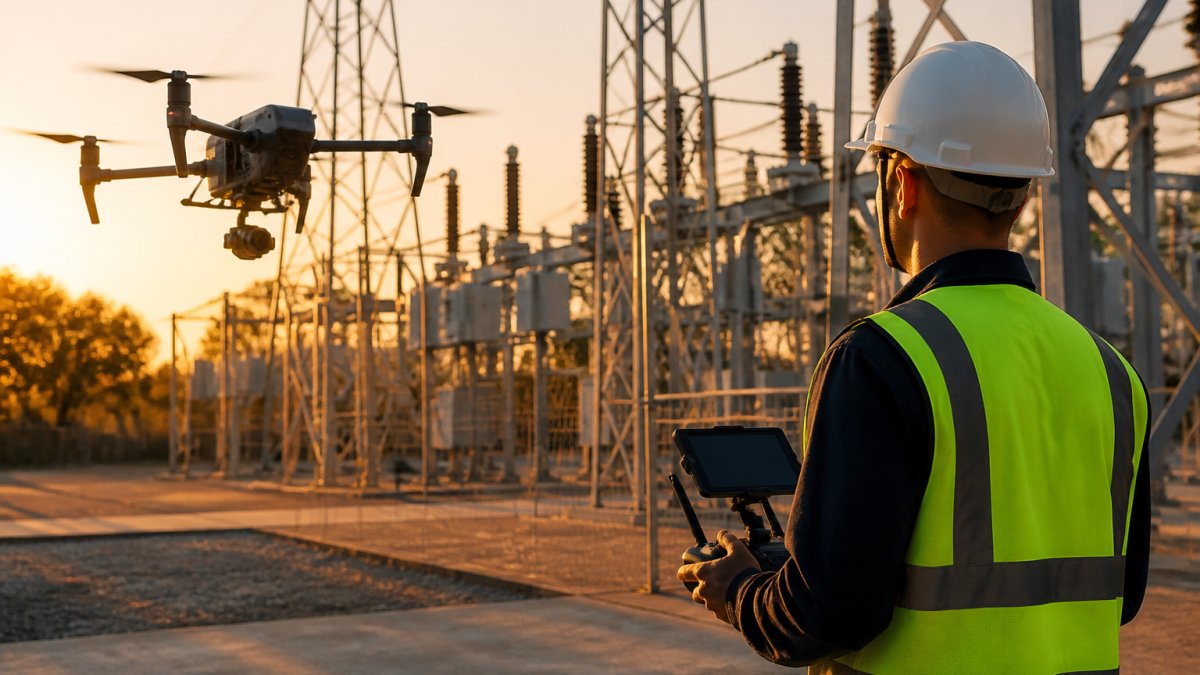
Last Updated: October 25, 2026
Quick Summary
The benefits of thermal drone asset inspection start with access: a drone reaches a tower, roof or flare stack in minutes, while scaffolding takes days and a cherry picker needs clear ground and a shutdown. A drone flight removes most setup cost, and the asset stays in service.
- Thermal imaging detects temperature differences that signal faults, such as hot electrical joints or cool, damp roof leaks.
- A drone flight replaces most work at height with a pilot on the ground, reducing worker exposure.
- Cost savings come from avoided scaffold hire, permits, standby crews and lost production, not the flight itself.
- A thermal inspection report should include georeferenced images, surface temperatures, ambient conditions and severity-ranked faults.
- Thermal inspection measures surface temperature only, so it cannot find defects behind cladding or perform contact testing.
Table of Contents
- Why Thermal Drone Inspection Beats Scaffolding and Cherry Pickers
- Thermal Imaging for Infrastructure Inspection: What You Can Actually Detect
- Drone Inspection Safety Benefits: Less Work at Height, Fewer Exposures
- The Cost and Downtime Case: What Actually Changes
- Thermal Inspection Report: From Data Capture to Maintenance Planning
- When Thermal Drone Inspection Is Not the Right Tool
- What Matters Most Before You Commit
- Frequently Asked Questions
Why Thermal Drone Inspection Beats Scaffolding and Cherry Pickers
The benefits of thermal drone asset inspection start with access: a drone reaches a tower, roof or flare stack in minutes, while scaffolding takes days and a cherry picker needs clear ground and a shutdown. A drone flight removes most setup cost, and the asset stays in service.
Method | Setup Time | Asset Downtime | Access Limits | Data Type |
|---|---|---|---|---|
Scaffolding | Days | Often required | Good, but slow | Visual only |
Cherry picker | Hours | Partial | Flat ground, height cap | Visual only |
Thermal drone | Minutes | None | Close approach, confined spaces | Visual and thermal |
Our drone inspection services cover the platforms, pilots and reporting.
Thermal Imaging for Infrastructure Inspection: What You Can Actually Detect
Thermal imaging for infrastructure inspection detects what the eye cannot: temperature differences that signal a fault, so a hot joint or cold, damp patch stands out.
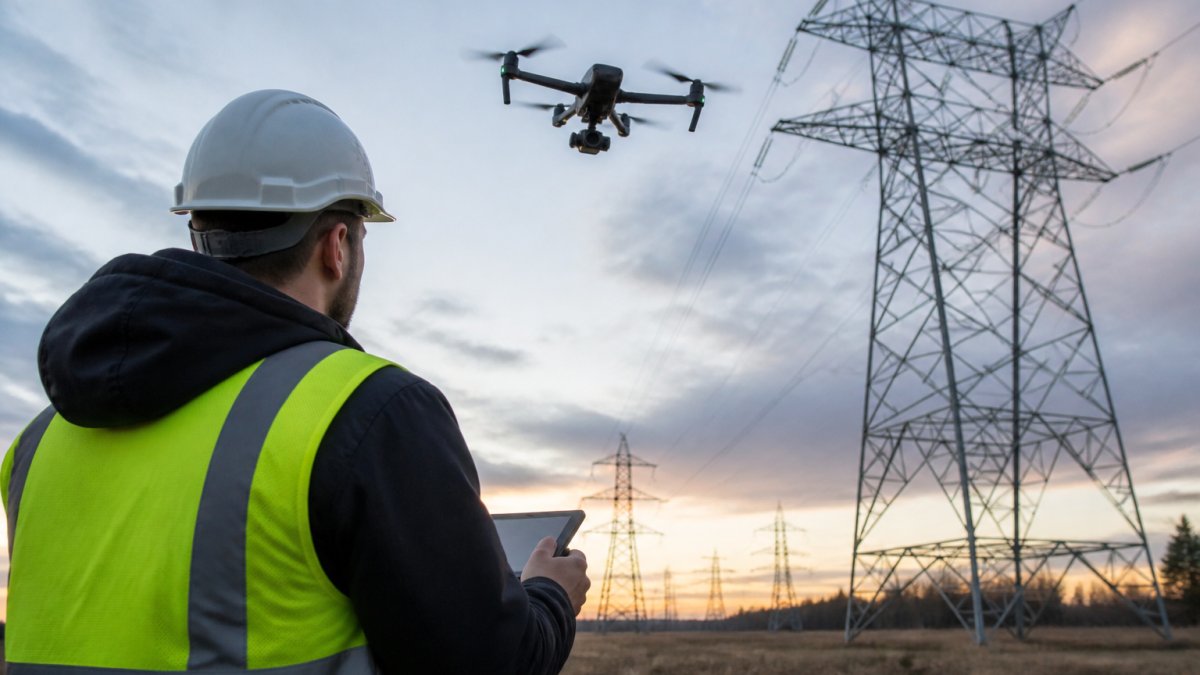
We run the DJI Matrice 4T and DJI Matrice 30T, both built for close approach to live infrastructure.
Drone Inspection Safety Benefits: Less Work at Height, Fewer Exposures
Drone inspection safety benefits come down to one number: people at height. Every scaffold climb, rope descent and cherry picker lift is an exposure, and a drone flight replaces most with a pilot on the ground. Work at height remains a leading cause of serious injury on Australian sites, and Safe Work Australia publishes the control hierarchy, a drone is the ultimate elimination control.
You can book a demo to watch a thermal pass on your own asset, or request pricing to start the buying conversation.
The Cost and Downtime Case: What Actually Changes
Cost savings from thermal drone inspection rarely come from the flight itself. They come from what you no longer pay for: scaffold and platform hire, permits, standby crews and lost production. The real comparison is total cost of access, scaffolding on a tall structure can run for days in labour and hire, while a drone mobilises in hours. We won't quote a figure here, because it depends on the asset, access method and frequency; ask for a like-for-like quote against your current contractor.
Thermal Inspection Report: From Data Capture to Maintenance Planning
A thermal inspection report turns a flight into a decision: georeferenced thermal and visual images for each defect, surface temperature readings with ambient conditions noted, faults classified by severity and recommended action, and an asset health summary feeding into maintenance planning. Deliverables should slot into your asset management system, not sit in a folder, a report without capture conditions is close to useless for comparison.
When Thermal Drone Inspection Is Not the Right Tool
Thermal drone inspection is not a universal replacement. It reads surface temperature, so it won't find defects behind cladding and struggles in heavy rain, high wind or when sun load flattens contrast. Some assets need contact methods, ultrasonic testing, thickness gauging or internal inspection, and a drone pass can prioritise where those go. It is a screening and prioritisation tool: it finds anomalies fast and cheaply, then targeted follow-up confirms them.
What Matters Most Before You Commit
Three things decide whether a thermal drone program pays off: thermal resolution, operator calibration and flight planning, and the reporting workflow. A poorly calibrated camera or a flight at the wrong time of day produces data nobody trusts. CASA compliance, insurance and airspace approvals also sit in the background, not optional, and where experienced operators earn their keep.
Thermal drone inspection only pays off when platform, calibration and reporting hold up under real conditions, the gap we close at DRONES180. We supply and support DJI Enterprise and AGRAS platforms with setup, calibration and product familiarisation, backed by operators who fly commercially every week.
Frequently Asked Questions
What is thermal drone asset inspection?
It uses a drone fitted with an infrared camera to measure surface temperature across assets such as power lines, towers, substations, roofs and industrial facilities. Temperature differences reveal electrical faults, trapped moisture, insulation defects and hail damage that a visual check would miss. Because the aircraft flies the asset rather than people climbing it, teams capture thermal imagery and visual data in one pass, with no scaffolding or shutdown required.
Can thermal drones inspect assets without shutting them down?
Yes, in most cases. Thermal inspection works on live equipment because it reads heat signatures rather than making contact, so switchyards, flare stacks and production plant can stay running during the flight. That avoids lost output and rescheduling costs. Some assets still need isolation for close physical follow-up work, so confirm the scope with your operator before the flight is booked.
How accurate are thermal drone inspections?
Accuracy depends on camera resolution, flight altitude and conditions on the day. Wind, direct sun, rain and rapid temperature change all reduce contrast between a fault and its surroundings, so inspections are best run in stable weather and low wind. Treat results as a screening tool: thermal imagery flags suspect areas, then a qualified technician confirms the defect. Ask for the camera model and calibration details in the thermal inspection report.
