Last Updated: October 26, 2026
Quick Summary
Scaling drone operations across multiple farms means building a system with standard procedures, trained operators and consistent data collection across every property. Success requires flight planning, fleet management, operator training, data handling and compliance that work the same way on each site.
- Start by defining what drones will actually do on each property before buying equipment.
- Use one standard operating procedure across all sites so operators fly the same route and collect comparable data.
- Match aircraft to jobs: heavy-lift sprayers for broadacre work, lighter aircraft for frequent mapping and crop checks.
- Keep a simple fleet register with serial numbers, flight hours, service history and assigned pilots for each aircraft.
- Roll out one property at a time, train operators with supervised flights, then review data before expanding to the next site.
Table of Contents
- Why Scaling Drone Operations Matters for Multi-Farm Management
- Planning Drone Flight Routes for Multiple Properties
- Building and Managing a Farm Drone Fleet
- Work out how many aircraft you actually need
- Match aircraft to jobs, not to fashion
- Battery and charging logistics across sites
- Spare parts and maintenance that travels with the fleet
- Allocating aircraft, pilots and jobs across properties
- Backup capacity and outsourcing
- Fleet records that actually get used
- Training Operators for Agricultural Drone Pilot Responsibilities
- Handling Drone Data Management for Agriculture Across Sites
- Compliance, Safety, and Quality Control Across Operations
- Getting Started with Your Multi-Farm Drone Program
- Step 1: Define the job before you define the fleet
- Step 2: Build one standard operating procedure and reuse it everywhere
- Step 3: Standardise data so properties can be compared
- Step 4: Roll out one property at a time
- Step 5: Model the economics before you expand
- Step 6: Set up quality control across sites
- Step 7: Plan for connectivity and contingencies
- Step 8: Review and expand deliberately
- Frequently Asked Questions
Why Scaling Drone Operations Matters for Multi-Farm Management
Scaling drone operations across multiple farms isn't about more equipment. It's about a system that works the same way on every property and gives you reliable data.
Most farm managers start with one drone on one paddock. That works until you've got three properties across different regions and you're juggling flight schedules, operators and inconsistent data.
The real problem isn't the drones. Without structure you get chaos: one property flown Tuesday, another untouched for three weeks, and data that looks different because each operator did things their own way.
The ones who succeed treat scaling drone operations like any other farm system: standard procedures, trained people, and a way to track all your sites at once.
This guide covers flight planning, fleet management, operator training, data handling and compliance, so you can roll out drones across multiple properties without losing control.
Planning Drone Flight Routes for Multiple Properties
Flight planning becomes critical with multiple sites. You can't fly by feel anymore. You need routes that are repeatable, efficient and safe across every property.
Start with a map of each property. Mark boundaries, no-fly zones and obstacles like power lines or buildings, then break each farm into sections based on what you need to monitor or spray. Size routes to what one drone can cover in a battery cycle.
Consistency is key. Fly the same paddock on the same route every week so you can compare data week to week and operators know exactly what they're doing.
Weather affects every site differently, a coastal paddock might have wind when inland properties don't. Build flexibility in and keep a priority list ready: if the wind's up, which property gets flown first?
Divide large areas into chunks that fit your drone's battery life.
Document every route. Screenshot your flight paths in the planning software and keep them on a tablet in the ute, so a new operator can fly the exact same route without guessing.
Building and Managing a Farm Drone Fleet
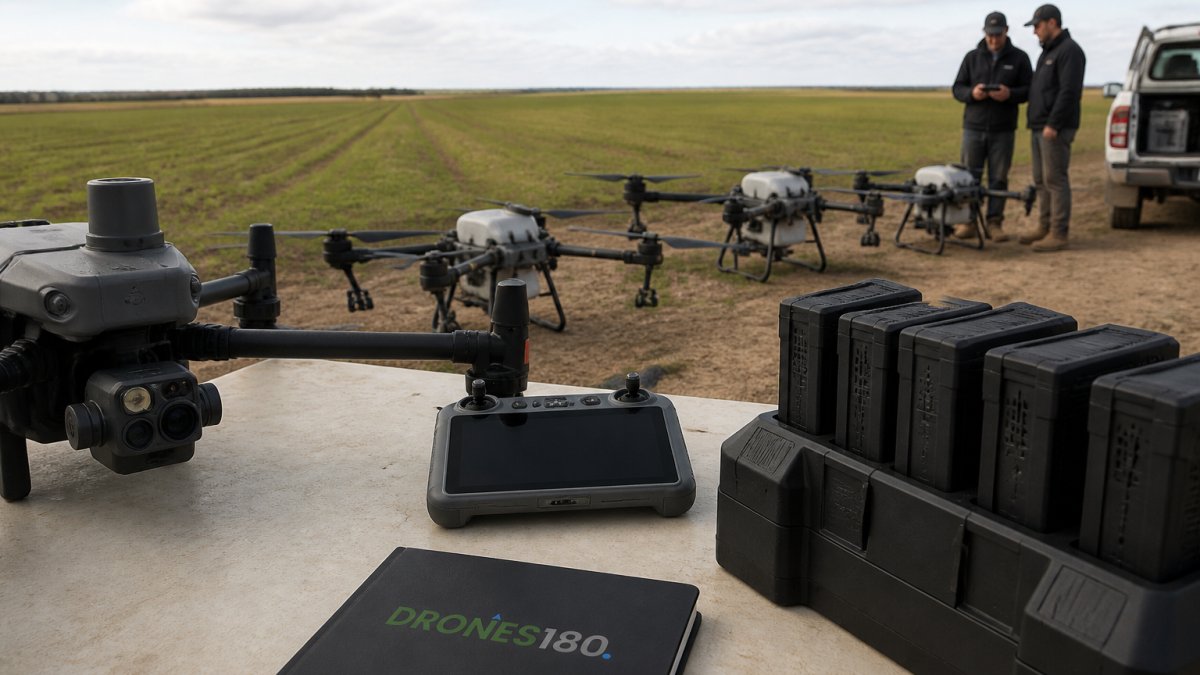
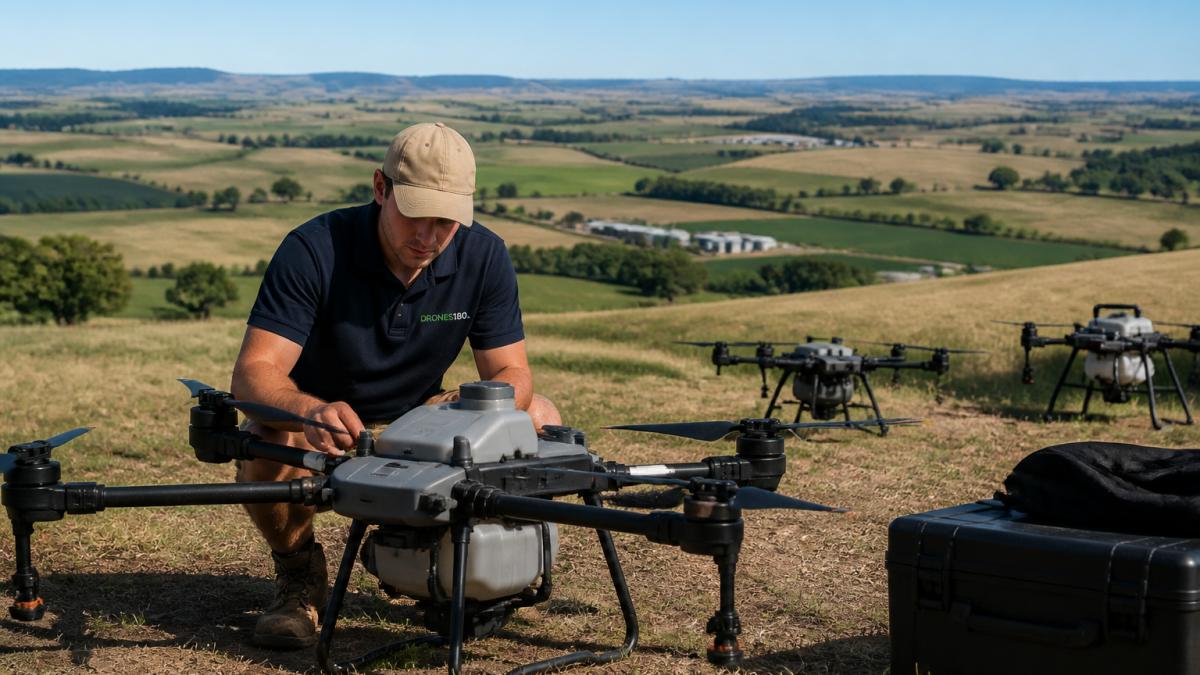
A fleet is not a shed full of aircraft. It's a small business unit, aircraft, batteries, chargers, spare parts, pilots and a schedule that all have to line up across every property.
Work out how many aircraft you actually need
Start with demand, not a shopping list. For each property, write down:
- Hectares to fly each week in peak season.
- What each flight does (spraying, mapping, crop health, livestock checks).
- Time per hectare for that job, including turns, refills and battery swaps.
- Suitable flying days per month in your district.
Match aircraft to jobs, not to fashion
Different jobs need different machines. A heavy-lift sprayer suits broadacre spraying and liquid application; a smaller, lighter aircraft is better for frequent mapping and crop-health flights. One of each lets you keep spraying while the mapper does weekly crop checks.
Keep a simple capability table for your fleet:
| Job | Preferred aircraft type | Typical flight length | Notes |
|---|---|---|---|
| Broadacre spraying | Heavy-lift sprayer | 10-15 minutes per tank | Needs chemical staging and refill plan |
| Crop health mapping | Light mapping aircraft | 15-20 minutes per battery | Fly same route each time for comparison |
| Spot spraying | Mid-size sprayer | 10-15 minutes | Best for small patches and boundaries |
| Livestock and fence checks | Light aircraft with good camera | 15-20 minutes | Often combined with mapping flights |
Battery and charging logistics across sites
A workable rotation is: fly one battery, put it on charge, fly the next. Keep a written log of charge cycles per battery so you can retire them before they cause a problem.
Spare parts and maintenance that travels with the fleet
- Two sets of spare propellers per aircraft.
- Spare gimbal dampers and cables.
- Basic tool kit and cleaning cloths.
- Spare nozzles and filters for sprayers.
- A tablet or phone with the flight app set up and logged in.
Allocating aircraft, pilots and jobs across properties
A weekly allocation meeting, even ten minutes on a Monday with a whiteboard or shared spreadsheet, can help organise work across properties.
For each property, list the jobs due that week and the aircraft and pilot assigned. Then check three things:
- Travel time. Group jobs by location so a pilot is not driving between distant properties in the same day.
- Aircraft availability. Make sure the aircraft assigned to a job is the right type and is not due for service that week.
- Pilot hours and fatigue. No pilot should be flying long days across multiple sites without breaks. Rotate pilots between properties where possible so knowledge is shared and no one is the single point of failure.
Backup capacity and outsourcing
Even a well-run fleet will hit a week where weather, breakdowns or a spray window collide. Keep a short list of contract operators for overflow spraying or mapping, and agree rates and availability before the season starts. A trusted contractor is often cheaper than carrying an idle aircraft for eleven months of the year.
Fleet records that actually get used
Keep one shared fleet register for each aircraft: serial number, total flight hours, service history, battery list, current faults and assigned pilot.
Training Operators for Agricultural Drone Pilot Responsibilities
Your operators are an important part of the operation. Training can help operators follow the same route consistently.
Every operator needs to understand what they're doing and why, not just pressing buttons. They need to read wind, spot problems before they become crashes, and handle the equipment like it matters.
Start with the basics: charging batteries safely, pre-flight checks, launch and land, reading the weather. Not glamorous, but where most mistakes happen.
Get formal training sorted early. You can find operator training and support for your multi-farm drone program through Getting Started & Support. Check CASA's current requirements for the operation you plan to conduct.
CASA Remote Pilot Licence requirements cover what you need to fly commercially. Make sure your team understands the rules before they're in the air.
Teach operators to think about the data they're collecting. A flight too high won't give the detail you need; too low might miss half the paddock. They're not just flying, they're collecting information that drives decisions.
Create a checklist for every flight: pre-takeoff checks, what to do if weather changes, the abort procedure. Write it, print it, use it every time, checklists remove the need to remember things under pressure.
Handling Drone Data Management for Agriculture Across Sites
Drone data can be processed into information for decision-making.
Set up a simple system for images and flight logs. Cloud storage works if backed up. Label everything clearly: property name, date, what you flew, conditions. Future you will thank present you.
Process data regularly. Weekly flights mean weekly processing, six weeks of backlog is a nightmare. Stick to a schedule.
Know what you're looking for, crop health, disease, spray coverage. Different questions need different data, so set flights up to answer the question you're actually asking.
Document what you find.
Share data with your team. If one operator notices something in the imagery, everyone should know. A simple shared folder or basic management system is enough.
Compliance, Safety, and Quality Control Across Operations
Flying across multiple properties means multiple airspaces, weather conditions and risks. Compliance isn't paperwork; it's how you stay safe and legal.
Check CASA's current requirements for each operation and location.
A flight log can record the date, location, duration, operator, weather and what you flew.
Establish safety procedures: your bad-weather abort point, how close you can fly to livestock, the protocol if something goes wrong. Write it down, train everyone, stick to it.
Quality control means checking your work. After every flight, review the data, does it look right, is coverage complete, are there gaps or errors? Catch problems early before they affect decisions.
Standardise procedures across all sites: the same pre-flight check, weather limits and flight patterns on every property.
Getting Started with Your Multi-Farm Drone Program
What follows is a rollout plan you can use property by property.
Step 1: Define the job before you define the fleet
Write down, for each property, what you want drones to actually do. Be specific:
- Spray a set number of hectares of weeds each season.
- Map crop health every 10-14 days through the growing season.
- Check fences, water points and livestock after storms.
- Produce a spray record for each paddock that meets your record-keeping obligations.
Step 2: Build one standard operating procedure and reuse it everywhere
A written standard operating procedure (SOP) for every site can cover:
- Pre-flight checklist (aircraft, batteries, props, firmware, weather, airspace).
- Launch and landing procedure.
- Altitude and speed for each job type.
- Battery swap and charging procedure.
- Data download and naming convention.
- Abort and emergency procedure.
- Post-flight inspection and log entry.
Step 3: Standardise data so properties can be compared
Set a naming convention before your first flight and never deviate. A workable pattern is:
PropertyName_YYYY-MM-DD_JobType_PaddockID
Step 4: Roll out one property at a time
- Map boundaries, obstacles and no-fly areas.
- Set up the site folder and job list.
- Fly a baseline mission with an experienced pilot.
- Train the assigned operator using the SOP.
- Run two supervised flights before they fly solo.
- Review the first month's data and adjust the schedule.
Step 5: Model the economics before you expand
- Utilisation. How many flying days per month will the aircraft actually be used? Weather, wind and crop timing cut available days significantly.
- Travel time. Add driving hours to the true cost of each job, a property two hours away costs more to service than one next door, even with the same hectares.
- Seasonal demand. Spraying and mapping demand isn't flat across the year. Model peak months and check whether your fleet copes without hiring.
- Break-even. Compare the annual cost of owning and maintaining an aircraft (purchase, insurance, maintenance, batteries, storage) against contracting the work out. If it's only busy a few weeks a year, contracting is often cheaper.
Step 6: Set up quality control across sites
Put three checks in place:
- Pre-flight check: operator confirms the correct site map, job type and settings are loaded.
- Post-flight data check: operator confirms complete coverage, no gaps and clear images before leaving.
- Weekly review: a supervisor samples flights from each property against the SOP and notes deviations.
Keep a short quality log.
Step 7: Plan for connectivity and contingencies
Before flying a new site:
- Download the site map and flight plan to the controller while still connected.
- Carry a backup tablet or phone with the app and maps loaded.
- Have a written procedure for lost link, low battery and sudden weather change.
- Keep a paper copy of the SOP and emergency contacts in the vehicle.
Step 8: Review and expand deliberately
DRONES180 Getting Started & Support covers operator training, equipment familiarisation and ongoing technical support for multi-farm drone programs.
DJI AGRAS agricultural drones come in different sizes for different needs. Whether you are flying a heavy-lift sprayer for broadacre work or a lighter aircraft for crop monitoring, the same principles apply: plan your routes, train your operators, manage your data, and stick to your procedures.
When you are ready to move forward, request commercial pricing for a fleet that fits your operation. book a demonstration to see the aircraft working on your own properties before you commit. Seeing drones in your conditions, on your land, answers questions that no brochure can.
Frequently Asked Questions
How do you manage drone operations across multiple farms?
Scaling drone operations across multiple farms starts with standardised procedures and clear roles for each operator.
What training do agricultural drone pilots need for multi-farm work?
Operators need training in drone operation and flight planning. Check CASA's current requirements for the operation you plan to conduct.
How should farm drone data be stored and shared across multiple properties?
Tag each dataset with the farm name, date, and drone used so you can retrieve records.
What happens if a drone breaks down mid-season when you're managing multiple farms?
Breakdowns can disrupt work. Ask your equipment provider about support options and plan how to manage work if a drone is unavailable.
The difference between a drone sitting in a shed and one that's genuinely useful is a system. You need the right equipment, trained people, clear procedures, and support when things go wrong. DRONES180 has built that system for farm operations across multiple sites. Book a demonstration to see how it works on your farms.
