
Treat Wet Paddocks Anyway: How DJI AGRAS Drones Keep Jobs Moving in Victoria and NSW
2 October 2026 · 8 min read
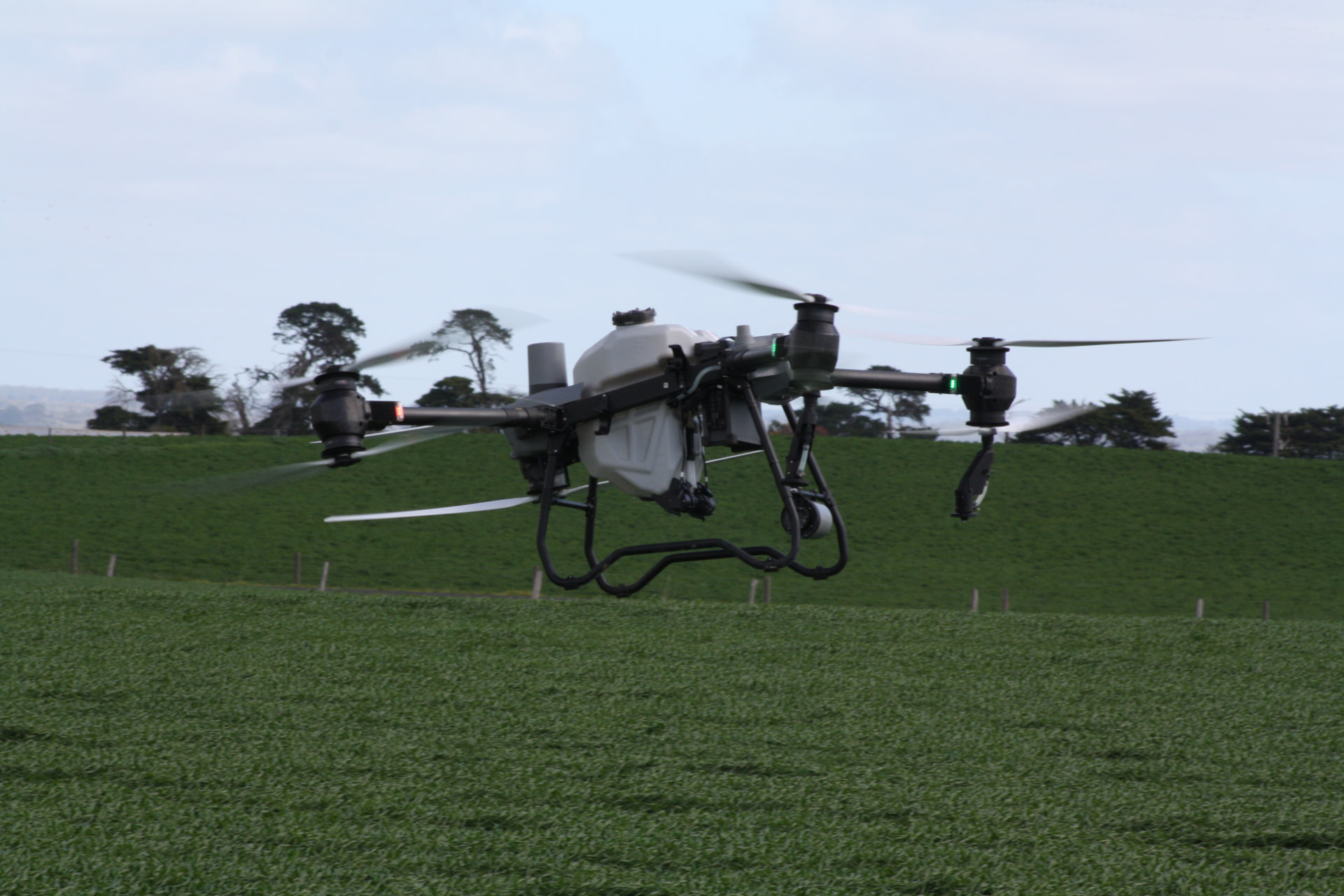
Wet ground does not always mean the job has to wait.
Wet paddocks create a simple problem. The treatment window opens, the ground will not carry machinery, and the job starts slipping.
That cost shows up fast. Weeds get away. Disease pressure builds. Slug activity lifts. Fertiliser timing falls behind. The paddock is the issue, but timing is what really hurts.
DJI AGRAS drones solve that access problem by spraying or spreading without relying on ground access. In the right conditions, they can apply product over wet paddocks without rutting, bogging, or pushing the work back another week.
This is not about replacing every ground rig.
It is about using the right production tool when access is the thing stopping the job.
Quick answer
If paddocks are too wet for conventional machinery, DJI AGRAS drones can often still apply fertilisers, slug bait, fungicide, or herbicide without putting wheels into the paddock. That helps protect timing, avoid ground damage, and keep treatment programs moving in Victoria and NSW.
What is drone treatment for wet paddocks?
Drone treatment for wet paddocks is the use of an agricultural drone to spray liquids or spread granules over land that is too wet for conventional machinery to access safely or cleanly.
In practice, the aircraft works from above while the operator runs the job from a suitable launch point nearby.
For growers and land managers in Victoria and NSW, the value is straightforward. If the paddock will not carry a machine, a drone gives you another way to get product out without waiting for the ground to dry.
That matters when the choice is not between drone and perfect ground conditions. It is between drone now or delay and wear the consequences.
The real problem is timing, not just access
Most people talk about wet paddocks as a machinery problem.
That is only half of it.
The bigger issue is what happens when access delays treatment beyond the right window. Once that starts, the job usually gets harder, not easier.
A delayed application can mean:
- weeds get larger and harder to knock down
- fungicide timing slips while disease pressure builds
- slug bait goes out later than it should
- nutrition timing falls behind
- labour and machinery schedules get pushed around waiting for one block to dry out
What most people get wrong
Wet paddocks are not just an access inconvenience. They are a timing problem. And in a lot of spray and spread work, timing is what decides whether the application does its job properly.
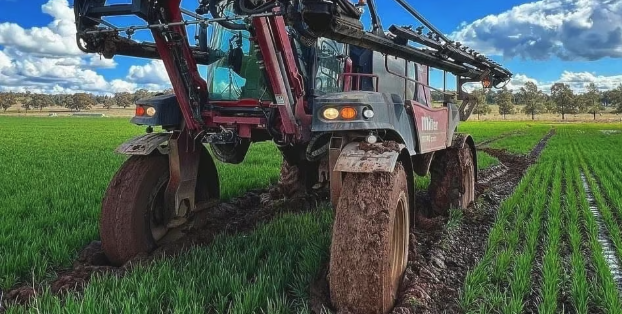
When the ground gives way, the whole treatment program stops with it.Photo credit: The Farmer Magazine
That is where DJI AGRAS aircraft make sense. They remove the need for the paddock to carry the machine.
What DJI AGRAS drones can apply in wet paddocks
In the right job, DJI AGRAS drones can be used for both spraying and spreading.
Spraying applications
Typical spray jobs may include:
- Herbicides where weeds need treating before they get away
- Fungicides where crop timing matters and delay creates pressure
- other approved liquid applications that suit drone spraying services and label requirements
Spreading applications
Typical spread jobs may include:
- Slug bait when wet conditions line up with active pressure
- Fertilisers where product type and rate suit drone spreading
- other approved granular products matched to the aircraft and task
The point is not that a drone can do everything.
The point is that the right AGRAS aircraft, with the right payload setup, on the right job, can keep work moving when ground access falls over.
That is how DRONES180 looks at these aircraft. Not as gadgets. As production tools.
When DJI AGRAS is the right fit and when it is not
Not every wet paddock job belongs in the air.
Plenty do.
Choose drone application if:
- the paddock is too wet for machinery right now
- treatment timing matters this week, not next week
- driving in will cause rutting, bogging, or crop damage
- the block is soft, awkward, irregular, or hard to access cleanly
- the cost of delay is higher than the cost of aerial treatment
- the product is suitable for drone spray or spread application
A ground rig may still be the better fit if:
- the paddock is accessible without causing damage
- the area is simple and conventional machinery can complete it efficiently
- the product or application rate is better suited to ground equipment
- weather or site conditions are not suitable for drone operations
Quick decision filter: the Access Window Check
Work through the five questions below. If the first three point to a problem, the aircraft is worth assessing.
| Question | If the answer is yes | What it points to |
|---|---|---|
| Is the paddock too wet for machinery right now? | Ground access is the problem | Drone may be the practical option |
| Does the treatment need to happen inside a narrow window? | Delay carries a real cost | Drone becomes more attractive |
| Will driving in cause rutting, bogging, or crop damage? | Ground entry creates extra risk | Aerial application is worth assessing |
| Is the product suitable for AGRAS spray or spread application? | The job fits the aircraft | Move to operator assessment |
| Can the operator complete the work safely and compliantly? | Delivery is viable | Book the job properly |
If you are ticking the first three boxes, you are not comparing drone work to ideal ground conditions. You are comparing it to missing the window.
Why Victoria and NSW are strong AGRAS use cases
Victoria and NSW both produce the same sort of access headaches. Wet periods, soft entries, slow-drying ground, and paddocks that do not carry machinery right when treatment pressure lifts.
That creates a familiar problem:
- the agronomic issue is live now
- the paddock is too soft for a ground rig
- waiting another week is not a clean option
This is where AGRAS aircraft earn their keep.
They do not fix every weather problem. They do remove one major limitation: needing wheels in the paddock to get product out.
That matters in:
- soft country after rain
- low-lying or slow-drying areas
- blocks where repeated traffic creates damage
- sites where gateways or access tracks are the weak point
- paddocks where getting bogged would cost more than the treatment itself
For operators managing multiple blocks, this is not just a paddock issue. It is a program issue. One wet block can throw the rest of the schedule around if you do not have another way in.
Why DJI AGRAS makes sense here
There are plenty of drones on the market. This use case is really about AGRAS aircraft built for agricultural application work.
That matters because the job is not just flying. The job is carrying the right payload, applying product properly, and doing it in a way that suits real field conditions.
A serious AGRAS setup gives you:
- aircraft built for commercial spray and spread work
- payload systems suited to liquid and granular application
- practical output for treatment jobs where access is the bottleneck
- a way to work from a suitable launch area rather than driving through the treatment zone
For DRONES180, this is the point.
We don’t just sell drones. We operate them.
That changes the conversation. The question is not whether the aircraft looks good on paper. The question is whether it is the right fit for the paddock, the product, the rate, and the timing pressure in front of you.
Talk to operators, not salespeople. If it is the right fit, that will be obvious. If it is not, that should be obvious too.
The practical advantages over waiting for the ground to dry
The obvious win is access. There are a few others that matter just as much.
1. You protect the treatment window
This is the main one.
If the application needs to happen now, waiting for tyres to get in can be the most expensive choice on the table.
2. You avoid rutting and bogging
Driving machinery into wet paddocks can leave a mess behind, even if the job gets done.
That can mean:
- damaged ground structure
- crop or pasture damage
- time lost recovering machinery
- extra repair work later
3. You reduce traffic through the paddock
No wheels through the treatment area means less disturbance where the ground is already vulnerable.
4. You keep the wider program moving
One inaccessible block can disrupt labour, sequencing, and machinery planning across other work.
A drone can clear that bottleneck instead of letting one wet paddock hold up the lot.
5. You can treat awkward areas more cleanly
Some paddocks are not just wet. They are broken up, patchy, or annoying to work around with larger gear.
That is where aerial application can be a cleaner fit.
What a proper AGRAS operator will assess before taking the job
If someone talks about drone spraying as if the aircraft is the whole story, keep looking.
The aircraft matters. The operation matters more.
A proper assessment should cover:
Site access and launch suitability
Even if the paddock is too wet for machinery, the operator still needs a safe and workable launch area nearby.
Product suitability
The product has to suit the application method, the aircraft, and the job objective.
Area, shape, and output requirements
Some blocks are simple. Others are awkward, broken up, or spread across multiple sections. That changes how the work is planned.
Weather and operating conditions
Wind, rain, and local conditions still matter. Wet ground is one thing. Unsafe flying conditions are another.
Safety and compliance
This is part of doing the job properly. Aviation rules, chemical handling, and site risk management all need to be handled properly.
Operator support and practical advice
This is where DRONES180 is different. The advice does not come from a brochure. It comes from people who operate these aircraft commercially and understand what holds up in Australian conditions.
The configuration advice you receive comes from the paddock, not a brochure.
Common situations where drone treatment makes sense
Here are a few jobs where this approach is often worth assessing.
Slug bait spreading after rain
This is one of the cleaner use cases.
Conditions are wet. Pressure is active. Ground gear cannot get in without making a mess. Timing matters.
Fungicide application during a narrow window
Disease pressure does not wait for the paddock to dry out. If the timing is tight, aerial access can keep the job on track.
Herbicide application where access keeps slipping
If weeds are moving and each delay makes the job harder, waiting for the ground to dry can turn a manageable job into a more expensive one.
Fertiliser spreading on soft ground
Where product and rate suit drone spreading, this can be a practical way to keep nutrition timing on track without driving machinery into wet country.
The belief shift: the real comparison is not drone versus ground rig on a dry paddock
This is where people get themselves stuck.
They compare drone application to the cost of a ground rig under ideal conditions.
That is not the decision sitting in front of you when the paddock is wet.
The real comparison is usually this:
treat now with aerial access
or
wait and wear the cost of delay
That cost can show up as:
- missed treatment timing
- harder follow-up work
- more crop or paddock pressure
- extra site damage if someone pushes in too early
- disruption across the rest of the program
So the useful question is not, “Is the drone cheaper than the ground rig?”
It is, “What does waiting cost us here?”
That is the question serious operators ask.
What to ask before booking DJI AGRAS spraying or spreading in Victoria or NSW
Keep the questions practical.
Ask about:
- whether the product suits AGRAS application
- whether the operator is set up for the type of spray or spread work required
- how quickly they can mobilise
- what area they can realistically cover
- what site information they need from you
- how they handle safety, compliance, and communication
- whether they service your part of Victoria or NSW
Good signs from the operator
- they ask sensible questions about the job
- they are clear about what the aircraft can and cannot do
- they do not overpromise output or conditions
- they understand both the AGRAS platform and the field reality around the work
- they treat compliance and planning as part of the job
Bad signs
- they talk only about the drone model and not the job itself
- they are vague on product suitability
- they make it sound like drones are the answer to everything
- they gloss over safety or operating limits
A good operator should be straightforward to deal with.
Not loose.
Frequently asked questions
Can DJI AGRAS drones spray paddocks that are too wet for tractors?
Yes, in many cases they can. If the issue is ground access, a DJI AGRAS drone can often spray from above without entering the paddock on wheels. The job still needs to suit the product, site, and operating conditions, but wet ground is one of the clearest use cases for this type of aircraft.
Can DJI AGRAS drones spread slug bait on wet paddocks?
They can be a strong fit for slug bait spreading where conditions are too wet for conventional machinery and timing matters. Product suitability, rate, and site conditions still need to be checked before the job goes ahead.
Are AGRAS drones better than ground rigs for all spraying jobs?
No. Ground rigs still make sense where access is good and the job suits conventional application. AGRAS drones are most useful when access, timing, terrain, or site sensitivity make ground equipment a poor fit.
Can drones spread fertiliser on soft ground?
Yes, where the product and application requirements suit drone spreading. This can be useful when paddocks are too soft for machinery and delaying the job would push nutrition timing off track.
Is drone spraying practical in Victoria and NSW conditions?
Yes. Wet paddocks, soft entries, irregular blocks, and timing pressure all make parts of Victoria and NSW a practical fit for drone spraying or spreading. The job still needs proper assessment, but the access problem is very real in both states.
What is the main benefit of using DJI AGRAS on wet paddocks?
The main benefit is protecting the treatment window when machinery cannot access the site. That can help avoid delays, reduce paddock damage, and keep the wider program moving.
Key takeaways
- Wet paddocks are usually a timing problem before they are anything else.
- DJI AGRAS drones can spray or spread without relying on the paddock carrying machinery.
- Useful applications may include herbicide, fungicide, fertiliser, and slug bait, depending on the job.
- The right comparison is often treatment now versus the cost of waiting.
- DRONES180 brings operator-led advice, not brochure-level recommendations.
If you have a paddock in Victoria or NSW that is too wet for conventional machinery, talk to operators who understand both the aircraft and the job. We can look at the site, the product, and the timing pressure and tell you plainly whether DJI AGRAS spraying or spreading is the right fit.
Talk to operators, not salespeople.