
Last Updated: November 10, 2026
Quick Summary
Realistic spray drone coverage is roughly 4 to 8 hectares per hour of actual work, and 20 to 40 hectares in a full day once refills, battery swaps and travel are counted. Your own figure depends on spray volume, tank size, flight speed, swath width and distance to the refill point.
- Double the application rate per hectare and you roughly halve the area covered per tank.
- Battery life caps output as hard as tank size, and every swap is dead time.
- Plan around the slower of tank or battery rather than the manufacturer's headline figure.
- Trees, powerlines, steep country and wind drift all slow real-world coverage.
- Refill logistics and travel between spread-out blocks eat into the working hour.
Table of Contents
- How Many Hectares Can a Spray Drone Cover Per Hour?
- DJI Agras T50 Hectares Per Hour
- Spray Drone Coverage Per Battery and Factors Affecting Drone Spraying Efficiency
- Frequently Asked Questions
How Many Hectares Can a Spray Drone Cover Per Hour?
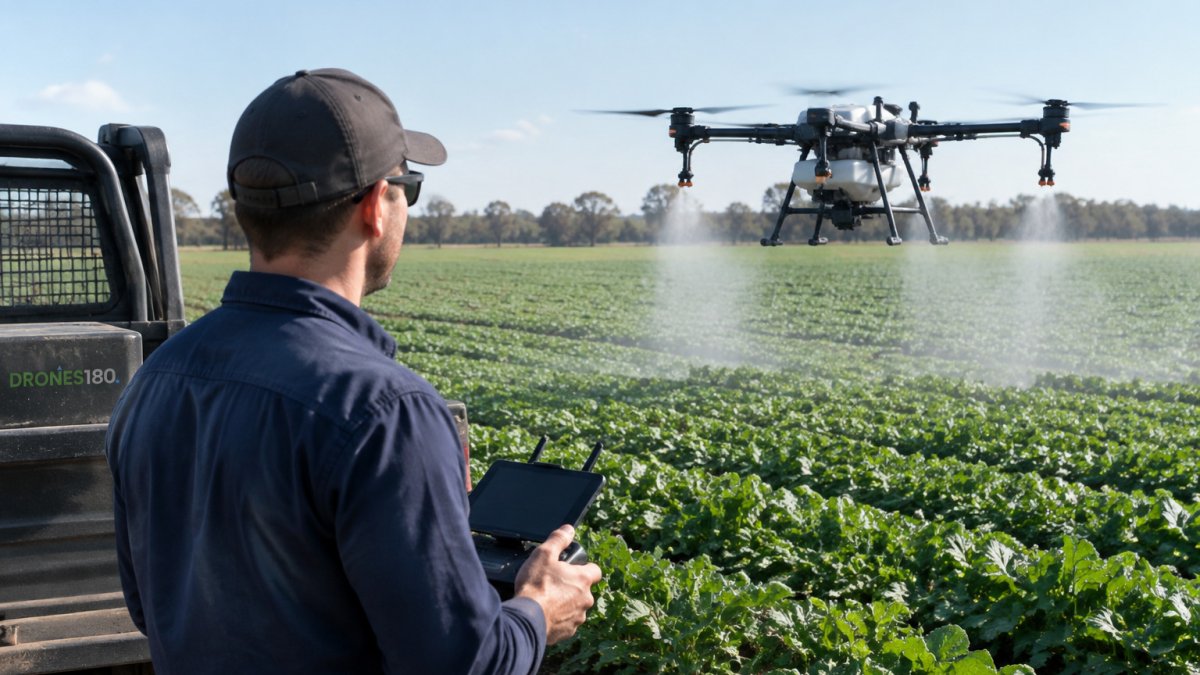
Most spray drone coverage claims are measured in perfect conditions, so the real number on your place is lower. In practice, a spray drone covers roughly 4 to 8 hectares per hour of actual work, and 20 to 40 hectares in a full day once refills, battery swaps and travel are counted.
No single figure fits every farm. The variables that matter are spray volume, tank size, flight speed, swath width, and how far you walk back to the ute for a refill.
Below, we'll show you how to calculate your own realistic hectares per hour, and why some operators get more output than others on the same machine.
Here are the realistic coverage figures the article gives for spray drones.
| Item | Value | Note |
|---|---|---|
| Coverage per hour | 4 to 8 hectares | Actual work, not perfect conditions |
| Coverage per full day | 20 to 40 hectares | Includes refills, battery swaps and travel |
| Key variables | Spray volume, tank size, flight speed, swath width | Plus distance to refill point |
| Doubling application rate | Roughly halves area per tank | Means twice as many refills |
| Plan around | The slower of tank or battery | Avoids budgeting on headline figures |
DJI Agras T50 Hectares Per Hour
The DJI Agras T50 is a platform in the AGRAS range. The real number depends on how much product you're putting on.
Coverage per hour falls as the application rate per hectare rises, so check your own spray rate before you plan a day's work.
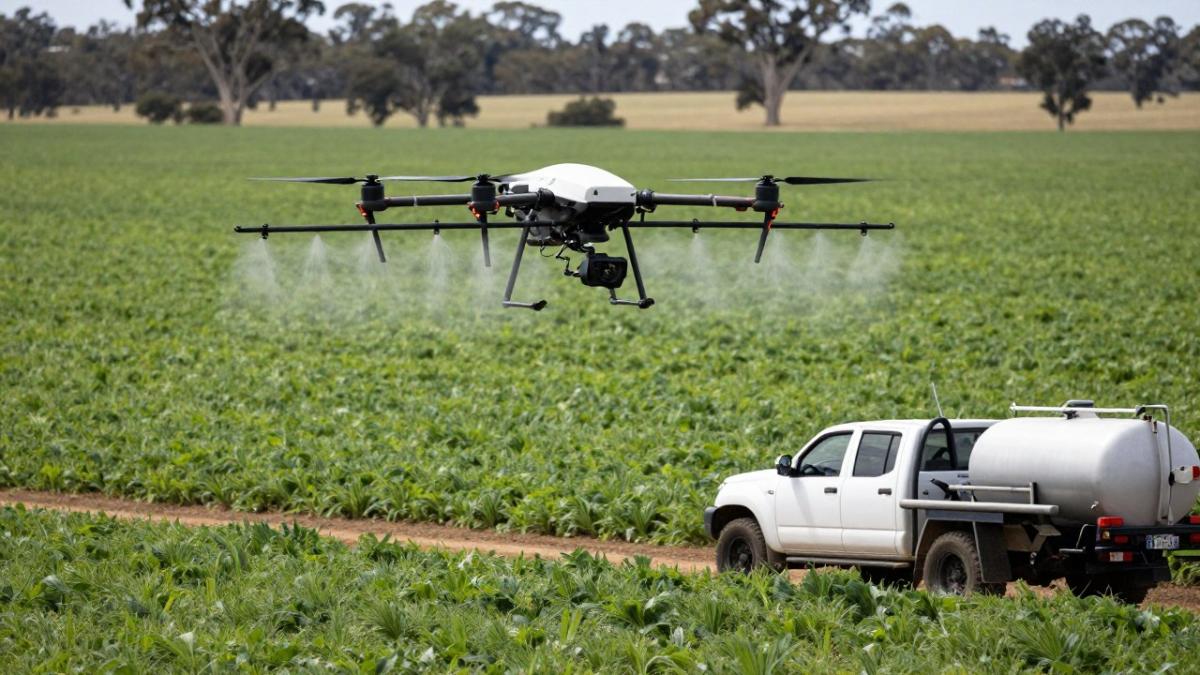
Application rate is the big lever. Double the litres per hectare and you roughly halve the area per tank, which means twice as many refills. That's the part most spec sheets skip.
For full specs and a configured quote on the T50, you can view the DJI Agras T50 details.
Spray Drone Coverage Per Battery and Factors Affecting Drone Spraying Efficiency
Battery life caps your output just as hard as tank size.
That turnaround time is where most of your day disappears. Here's what changes real-world spray drone coverage:
- Spray volume per hectare - more litres means less area per tank
- Tank capacity and refill frequency - smaller tanks mean more stops
- Flight speed and swath width - faster and wider covers more ground, within limits
- Battery life and swaps - each swap is dead time
- Terrain and obstacles - trees, powerlines and steep country slow you down
- Weather and wind - drift risk forces lower speeds and tighter passes
- Refilling and charging logistics - how close your water and power are to the block
If you want to see how battery capacity directly limits your hectares treated, the DJI DB1560 flight battery is the unit that powers the T50 and T40.
A common mistake is budgeting on the manufacturer's headline figure and then wondering why the day falls short.
If you're weighing up which machine suits your block, our guide on how to choose a spray drone for a vineyard walks through matching the drone to the job.
Refill logistics and travel between blocks also catch people out.
For a full comparison of the AGRAS range with comparable specs, you can browse the DJI AGRAS agricultural drones, or if you'd rather have the work done for you, look at our drone spraying and spreading service.
Working out realistic spray drone coverage is the difference between a machine that pays for itself and one that sits in the shed.
Get started with DRONES180 and turn a realistic hectares-per-hour figure into a plan that stacks up.
Frequently Asked Questions
How many hectares can a spray drone spray in an hour?
There is no single number. A spray drone's hourly coverage depends on its tank size, the spray rate you set, flight speed and swath width, plus time lost to refilling, battery swaps and wind. A smaller unit might treat a few hectares an hour, while a large Agras platform can cover considerably more under good conditions. Work out your own figure using your spray rate and realistic turnaround times rather than trusting a headline number.
How much area can a spray drone cover on one battery?
Spray drone coverage per battery is usually limited by battery life or tank capacity, whichever runs out first. A large tank often empties before the battery does, so you refill and swap in one stop. Plan your passes so each battery set finishes near a refill point, and keep spare batteries charging on a generator. That keeps turnaround time short and lifts your real daily output.
Does spray volume change how much area a drone can cover per hour?
Yes. A higher drone spraying rate per hectare uses more litres on each pass, so the tank empties sooner and you refill more often. Lower volumes stretch each tank further but may need slower speeds or tighter passes to get good coverage. Match your spray volume to the crop and product label, then calculate coverage from that rate instead of assuming a fixed figure.
